 INICIAR SESIÓN

In today’s fast evolving business world, one model has gained strong traction for the way it has transformed how companies manage talent: remote staffing.
This approach not only responds to current needs for flexibility and adaptability, but also delivers multiple benefits for organizations looking to scale and compete in a global market.
In this article, we’ll explore what remote staffing is, why more companies are adopting it, and the advantages it offers to businesses.
What Is Remote Staffing?
Remote staffing refers to the practice of hiring professionals who work from remote locations rather than a traditional physical office.
This model allows companies to access global talent without the constraints of geography. Through digital platforms and collaboration tools, organizations can effectively manage distributed teamsacross different regions, optimizing both resources and capabilities.
More and more companies are embracing this model because one of its main advantages is access to a broader talent pool. Businesses are no longer limited to hiring candidates within their local area. This is especially valuable for specialized or hard-to-fill roles where talent is often scarce.
Additionally, remote staffing can lead to a significant reduction in operating costs. By eliminating the need for physical office space and reducing overhead expenses, companies can reinvest thoseresources into more strategic areas. Many remote professionals are also open to compensation aligned with their local markets, which can result in substantial cost savings.
The remote staffing model also enables companies to respond quickly to market fluctuations. In the context of Mexico and the United States, aligned time zones and cultural similarities makecommunication easier, enhancing team efficiency and collaboration.
Remote work also contributes to higher job satisfaction. Professionals value the flexibility to work from anywhere, improving work-life balance. This leads to higher talent retention and reduced costsassociated with employee turnover.
Benefits of Remote Staffing for Businesses
For companies looking to scale or optimize their operations, remote staffing offers several strategic advantages.
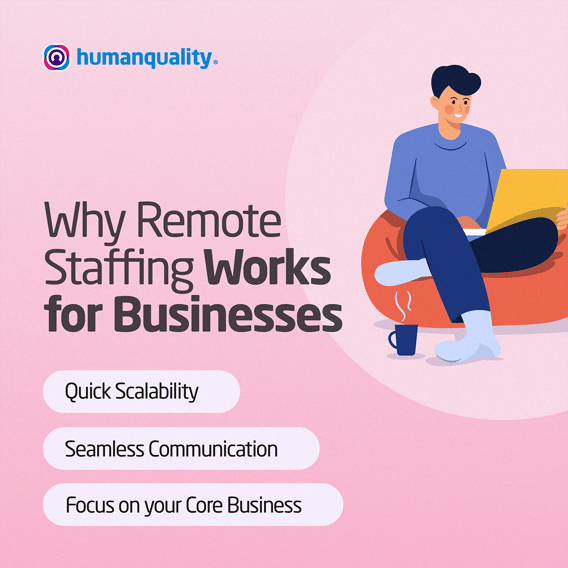
With this approach, organizations can scale their workforce much faster adding new team members in days rather than weeks or months. This is especially critical in high-demand industries wherespeed is essential.
While it may not seem significant at first, having teams in the same or similar time zones and with shared cultural values greatly improves communication. Mexico and the United States share manycultural similarities, allowing for smoother collaboration and alignment.
Another key advantage is that by outsourcing processes such as recruitment and payroll administration, companies can focus on their core business. This increased focus helps organizations operatemore efficiently and remain competitive.
Remote staffing is more than a trend, it’s a necessary evolution in the modern workplace. With the ability to access global talent, reduce costs, and increase flexibility, companies that adopt this modelare positioning themselves for long-term success in an increasingly competitive market.
If your company is ready to take the next step toward remote hiring, contact us today.
At Human Quality, we’re here to help you navigate this new workforce model and maximize your team’s potential. Together, we can build the future of your business. Let’s talk.

